
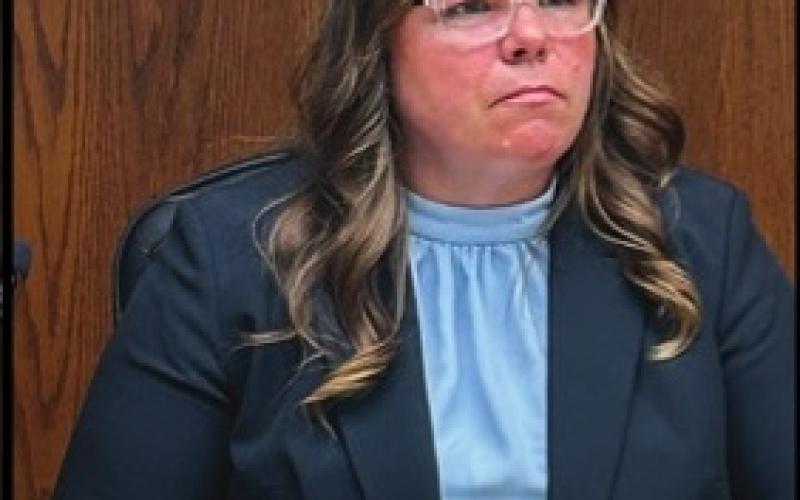
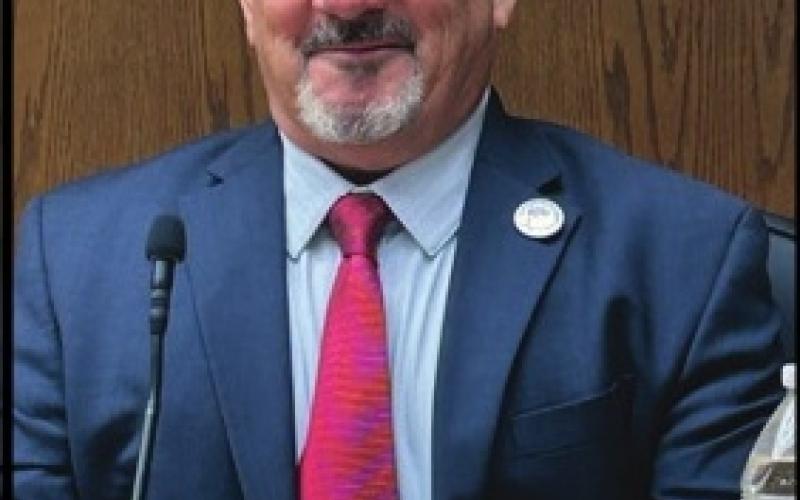
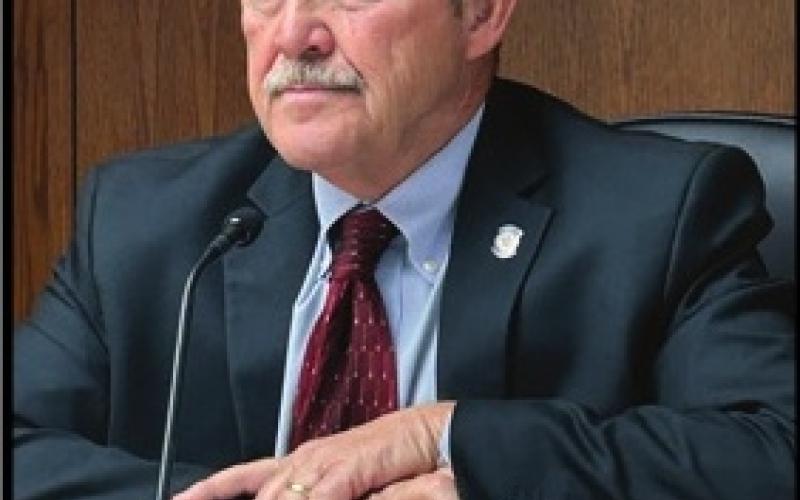
The Pottawatomie Advocates for Voter Education (PAVE) hosted a candidate forum on May 12, 2026, for candidates for the OK House of Representatives Dist. 27, incumbent Danny Sterling and candidates Roberta Lewis and Shoney.
Below, the Countywide & Sun chose to publish a few of the questions asked. However, those interested may visit the City of Shawnee YouTube channel to view the entire forum.
OPENING STATEMENT
LEWIS: I am a mother of three, a wife, and I have a 25-year-old, an 18-year-old who just graduated from high school, and then a 15-year-old still at home. I’m an army veteran. I did 10 years in the army, where, after my 10 years, I decided I wanted to be a stay-at-home mom, and that’s what I did. You know, chair of the booster club, volunteering at school, substituting at the schools.
About four years ago, a gross government overreach came into my family and weaponized several systems against me, and that’s what got me involved in politics. I started advocating for parental rights up at the Capitol. I started looking at legislation. I started helping legislators understand legislation, things that are happening in our schools, things that are happening in government agencies, and what those look like, boots on the ground.
They all look good on paper, but what they actually look like when they become laws and how they affect the people in the district. So that’s what I’ve been doing for the last four and a half years. I’ve been all over Dist. 27, you know, the last year, just talking to constituents; up at the capital, working on things like that, and that’s my job, that’s what I’ve been doing.
QUALLS:You’re why we’re here, and we never need to lose sight of that. Our republic is only as strong as we have educated and engaged voters. So, regardless of who you vote for, just get out and vote. Remember that.
Tell you a little bit about me. I’m a fifth-generation OKn. Part of my family was walked here. The other part of my family came here in a covered wagon before statehood, and so this land is important to me. It’s important to my family.
I’ve lived in this district now for a few years, and I’m running because I see a problem. I see a threat to our land, whether it’s turnpikes, whether it’s grow centers by cartels, or the Chinese Communist Party running it. I’m concerned about what the future of our state looks like.
I’ve been married... for 36 years. We have two children that are grown. They’re OKns as well. And we had our first granddaughter in October, and that stuck with me as I think about the OK that I grew up in, and the OK that we know. I want her to have that too.
I grew up in a small town in OK. I served our country as a United States Marine officer overseas. At the time, I was 22 years old. I led 75 people in the Middle East, Israel, Africa, and Bosnia. Came back and spent a career in small business as well as large business. So, my background with leadership, my background in business, uniquely qualified me to help serve, continue to serve as I did as a Marine, as your state representative. Thank you very much.
STERLING:
Little history about me, I know there’s several in here that know about me because you actually kind of grew up with me to a degree. I was born in Noble, OK, on the dairy farm. I went there all my life…I graduated from Noble High School. I was a huge OU fan growing up, and then I realized that I was going to be an agriculture education teacher, and then I went to OSU, and my allegiance has changed a little bit. I still like both universities very much.
So, as far as my family goes, I have four sons. I have six grandchildren. My wife, Gina, she is a native of Tecumseh, and, like I said, we have a small farm, run cattle there on the side keeps me very busy.
As far as my professional career, it’s pretty short and sweet. I taught at Tecumseh School for 24 years as an agriculture education teacher, and then I went into administration, and I was there for 16 years, for a total of 40 years, all in one spot there at Tecumseh High School. So very wonderful community, and very much very lucky to have lived in this particular community.
So that’s a little bit of my biography. For the most part, I’d just like to say that I’m proud of my main accomplishments, so far, that I’ve made with my constituents to help them have a better life.
I campaigned back eight years ago on education, economic development for schools and our communities, and supported public safety. I’m running on my voting record for the last eight years, and many times that was very difficult, but you had to vote. I was elected to vote, and that was what I did.
Q1:Do you believe the increasing number of turnpikes are warranted in our state? And if so, what needs to be done to protect those who are in the path of a proposed turnpike, when it comes to compensation and relocation?
LEWIS:The turnpike in OK is kind of a double-edged sword, if you look at it, because the turnpike... there’s a turnpike supposed to go through Noble, and that turnpike would put Noble on the map, I mean, it would bring tax dollars to Noble, it would bring economy to Noble, the schools would have more money, and so the question is, do the citizens want it?
And so when you start looking at money, and we put business people in office, and all they do is they look at money, the human part of government starts to get kind of set on the back burner, and so that’s what we have to look at.
We have to look at, do the constituents want it? We know the government wants it, it’s going to bring tax dollars, but do the constituents want it? Do they want just to have better free roads to drive on, or do they want a turnpike coming through and putting their little town on the map, so for me it’s absolutely, we have to make sure that the citizens are being fairly compensated, that they’re not being forced to do anything that they don’t want to do, and they should have a voice in those decisions, they should have a voice in those conversations that are happening, but sometimes it’s hard to get the citizens to participate, and we cannot confuse lack of participation. We cannot excuse government overreach for lack of participation, and we have to remember that in everything that we do for our state.
QUALLS: We talk about the increase in the number of turnpikes. We talk about fair compensation. What is fair compensation?
What about the family that lives eight miles from me, in between where I live and Noble? They’ve been here since statehood. They have 120 acre horse ranch. What's fair compensation for that? Where else are you going to find 120 acres within 20 minutes of Norman? You won’t. It’s not here anymore. They’re losing their entire way of life, and not for a state agency. The Turnpike authority is not a state agency, it’s a private organization. They sell foreign bonds to take our lands, our homes, our ranches, our businesses. We don’t get a vote in it. I thank our current elected official, Rep. Sterling, for what he’s tried to do, but we’ve had elected officials in there for years. The Turnpike to Southern Extension has been planned for over 15 years. Did anybody know about that? Do we know about the next turnpikes that are going in? Maybe one running from Durant to Paul’s Valley, maybe one from Lawton over to Duncan, taking farms and lands. We don’t know about it, because there’s no transparency. On day one, if elected, we will have some transparency.
The OK Turnpike Authority will be required to show where projected turnpikes are going, what it’s going to cost in terms of lives, homes, money, and the environmental impact of that.
We can no longer continue as OKns to let people behind closed doors make decisions for us without our elected officials and us, the voters, having a say.
STERLING: If anybody’s been following my record in the capital, ...the last six years, I have been very intricately involved with the situation with the turnpikes. Let’s just put it this way, I’m not the turnpike authority’s favorite person at the capital...We have a good relative professional relationship, but my duty is to take care of my constituents. The turnpike, especially the south extension, runs through probably more of my district per mile than any other legislator in the state represented specifically. I have been speaking of compensation. I have actually just authored a bill that would require just compensation for anybody who’s losing their property to a turnpike at no wish of their own, and the bill didn’t move forward.
That is a very, very tough situation to work going against OK Turnpike at the Capitol right now. It’s kind of like it’s an 800-pound gorilla, and you’ve got to take a little bit off of it at a time. I’ve had some success there. We’ve made changes with OK Turnpike Authority Board, but again we need to make sure if somebody is going to be affected by the Turnpike, they receive just compensation. My bill would have provided 150% of the fair market value of that Turnpike if it came through there. Also, it would assist with relocation costs as well. Again, remember these are people who did not ask for this to come through their property, and I know turnpikes are needed to a certain degree. Sometimes I’m not sure if it needs to be a turnpike or maybe just a free road. So, again, we got to move traffic, but also we got to take care of the people that have been affected by this in a very negative way.
Q2: Senate Bill 504 sometimes referred to as the child marriage bill, recently passed the OK Senate, and then barely passed the House. Do you believe this initiative appropriately addresses concerns related to minors in marriage, and if not, what changes or alternative approaches would you support?
LEWIS: This is a controversial piece of legislation, and I think that it’s important for people to know. I said I had three children, my oldest child, I was 17 years old when I had him, and a single...I was a teenage mother living with my boyfriend, and I had to go to my mom’s house to get her to sign insurance paperwork, because I was still a minor...I was in charge of another human being, but I couldn’t sign my name for another human being. We’re not marrying off nine and 10 year olds in OK. The law is you have to be 16 with a parental signature, and so we’re talking about 16 and 17 year olds. I think maybe the better focus would be on how do we keep 16 and 17 year olds from being in that situation.
Senate Bill 504 takes those exemptions away, and so somebody like me, I couldn’t go to my parents and get married at 17 year old...there would be no work around Senate Bill 504. I would have been a no vote, just like Mr. Sterling was, and for that reason I just think that...there’s a different option, there’s a better way, and graphics will will point to we’re marrying off nine and 10 year olds, and that’s not the case in OK.
QUALLS: I’ll tell you a personal story about this, and this is why I would absolutely be a no vote. As a United States Marine Lieutenant I was responsible for the health and welfare of my Marines, both while they were on duty and when they were off duty. And there are other states that have passed this, and let me tell you, what the impact of that was on a marine unit, and will have an effect here. We had a marine who married a girl, 15 years old, who was signed off by her parents. When we deployed, she didn’t have a driver’s license because she wasn’t 16. My wife and the other marine wives had to take her to the grocery store, had to take her to the babies pediatrician. Absolutely, that’s not where we need to go as a state. There are one-offs to every exception to every rule, and we can take those one by one, but to pass a law where we’re not protecting our minors. No.
STERLING: Well, yes, I did vote no on that bill. That was a very, very controversial bill at the Capitol, passed by one vote. As far as needing the majority to pass, it passed by one. It was one that we got a lot of input on. It barely made it out of committee. It was that close, and again, I understand there’s issues, there’s viable arguments on both sides of this issue. I think moving forward, if the governor doesn’t veto it, and then ultimately it does become law, I think it’s incumbent upon us as legislators to maybe go back, take that back in to committee. Let’s look at it, let’s look at the things that are of concern there that anybody might have, see if we can tweak it, see if we can amend it, and you know. Like I say, I agree with what both my opponents here are saying, that that’s something that we feel like that it was no vote on would be merited. Also, I just like to say that not only is that something that is dealing with government overreach, you know, sometimes we want government overreach till we don’t.
Whenever it's convenient, we want that sometime. And I feel like here this was a government overreach that is something that should take place among families. That’s a family decision. And again...we were not going to be marrying nine and 10 years old, like it’s been portrayed on the great Facebook...That was my stance on making the reasoning in my mind to vote no for that bill.
Q3: Since many students do not follow the traditional path to college after graduation, do you think our schools are providing enough guidance to encourage them to pursue a career via the career tech path, especially with the new graduation requirements?
LEWIS: My son just graduated...the welding program, got his certifications. My daughter just got accepted into the pre-engineering program as a sophomore next year. I graduated vo-tech as a senior.
What I found out when I tried to get my son into career tech, is that there’s not enough slots open for the amount of kids that want to do career tech....We toured the vo-tech, Gordon Cooper, what we found was they’re only using half of the welding classroom. They could actually have a second welding class. I talked to the superintendent about that, and it wasn’t financially sound for them to have a second welding class. And so when you have kids, this is their way out of poverty…We need to be doing everything to facilitate that for them. We need to be celebrating career tech graduations just as much as we do college graduations, and we need to understand that a lot of these blue-collar kids, they’ll be a lot richer than any of us in this room will ever be...I feel like we need to be putting more emphasis on career tech.
QUALLS:I think I may be uniquely qualified here to answer that, because growing up in a family-owned business of heat and air and electrical contracting, at eight years old, I was in the attics, and I wish it was just electrical. My dad decided to buy an insulation truck, and so I was blowing insulation as a boy. I ran that heat and air business and electrical contracting business after he passed, and I can tell you right now that we are not doing enough as a state to prepare for what’s coming. Not everybody wants or needs to go to the University of OK...or wherever, because you can talk about artificial intelligence, AI, when it’s Jan. 12, and your power goes out, AI is not going to help you. It’s going to be a heat and air guy or gal coming.
If it’s Thanksgiving and your plumbing goes down, AI is not going to help you. It’s going to be a plumber, right? And so, if elected, on day one, I have a plan to help get beyond the logjam, career techs, and vote techs across the state, and that’s going to be to take our high school seniors and create an apprenticeship program for them.
When I graduated high school, I was an electrical apprentice because I had grown up on the trucks....But imagine a situation where you are a plumbing contractor, a heat and air electrical contractor, a carpenter, and you get a tax break from the state of OK. If you can take a high school senior for part of that day and put her or him out on the trucks to learn how to do a trade, so by the time they graduate they have a marketable skill. And if they want to go on to career tech after that, and they have room for it, great. If not, we are preparing our next generation of workers to take this state and Dist. 27 specifically. We are unique, and we can do that.
STERLING: I’m very passionate about education, and this is something that I have advocated for as a teacher and a principal for years. We always encourage our students to better themselves…to better their self. Lots of times, that equates to them going to college. And we’ve seen now, if you paid a plumber lately, for example, or anything else, that that’s not necessarily always the most fruitful paying job to get a high college degree. So we’re very much aware that we need to look at other pathways besides the route to college. With the new graduation requirements we’ve created - before, we had two diploma systems, standard and then advanced, for lack of a better word.
Now we’ve kind of married those two together, and we’re starting to work with our career techs...in fact, nationally, we are recognized as one of the top states in the nation when it comes to career tech education. And like I say, as far as our workforce situation, we really need to enhance that and continue that trajectory that we’re on right now. Some of the changes in the graduation requirements is basically centered around math and science to allow some of these courses that will count towards math and science credit in college or even into career tech... because a lot of the programs that career tech offers is equivalent to a junior college or two-year college degree. We need to look at all possibilities, all avenues to increase our workforce in OK, because we know we really are suffering in that particular area, and I think this is a way to do that.
CLOSING:
LEWIS: …I can say that I’m so disappointed in the lack of citizen participation, even when I go to the doors, and I think it’s because people are tired, they’re burnt out of politics. They go to their mailbox, and they get five flyers. They’re getting text messages all day, and so it makes me kind of concerned about our political system and this election coming up. But as far as me, you’ll see me out knocking on the doors. You can see me in the community. You can see me at events, talking to people, and whatever.
What I want to say is, whatever your position is in this election, June 16, whatever your position is, just vote. Just go vote June 16. That’s your right to do so. It’s your responsibility to do so as a citizen, especially as a citizen of Dist. 27.
I encourage everybody to vet all of us candidates to look into us and ask us questions, even the hard questions. Sometimes the hard questions are difficult to answer, and they make people nervous. But I encourage people to ask those questions.. Just talk to your candidates, and show up to vote on June 16.
QUALLS:...I hope that this has given you an insight into maybe the similarities and differences of the candidates.
I want to close by saying that the threats to Dist. 27 you’ve heard me enumerate some of them. We have elected officials just this last week that are going to send a bill to the governor’s desk to take human bodies to compost them and use them as fertilizer. Believe that or not, they are. We don’t have any studies on what the viruses, the bacteria, the heavy metals, the diseases, whether it’s AIDS, COVID, hepatitis, tuberculosis, that these bodies have are going to be put into our OK soil.
My campaign slogan is protecting our land and putting Oklahomans first. These are the types of issues that face us today. I am the only candidate that has been vetted and certified by the OK Republican Party on this table, I am not a career politician. I genuinely want to serve. As I have in the past as a United States Marine, as a businessman. I look forward to that opportunity. And again, I thank you once again for your participation this evening,
STERLING: Well, first of all, I’m going to start and end with the same concept, and that is, most importantly, I think the thing I want to run for re-election for is helping my constituents.
My vote is only one of 101 at the Capitol, but during the interim, especially, I have multiple opportunities, and have had multiple opportunities to help constituents that’s had individual problems when they felt like they had nowhere else to turn, so they called our office. We did what we could.
I have a saying: I don’t promise I’m going to fix your problem, but I’ll at least look into it for you. And a lot of times there’s things that I can’t do once I look into that.
Legally, I’m not able to sometimes, because of the FERPA laws...I’m not able to gather the information that I’m asked to achieve or request.
Something I take great pride in, is helping those constituents who feel like they have nowhere else to go...not receiving their child support, not being able to get a landlord to do the things they’re supposed to. Not being able to see their family when there’s medical issues going on, especially during the COVID thing. Just a multitude of things.
But that right there is probably the most satisfying part of my job. I’m currently continuing the path that I’m on right now with education, all the things I ran for. I want to say one thing. My voting record is what it is. You can see what it is. I’m the only one up here to have a voting record, so it’s pretty easy to check me out, so you know what you’re getting. I also just want to thank or recognize the Maddiz Bias family, and what took place today with the governor signing that bill. Again, that was a prime example of me helping someone.